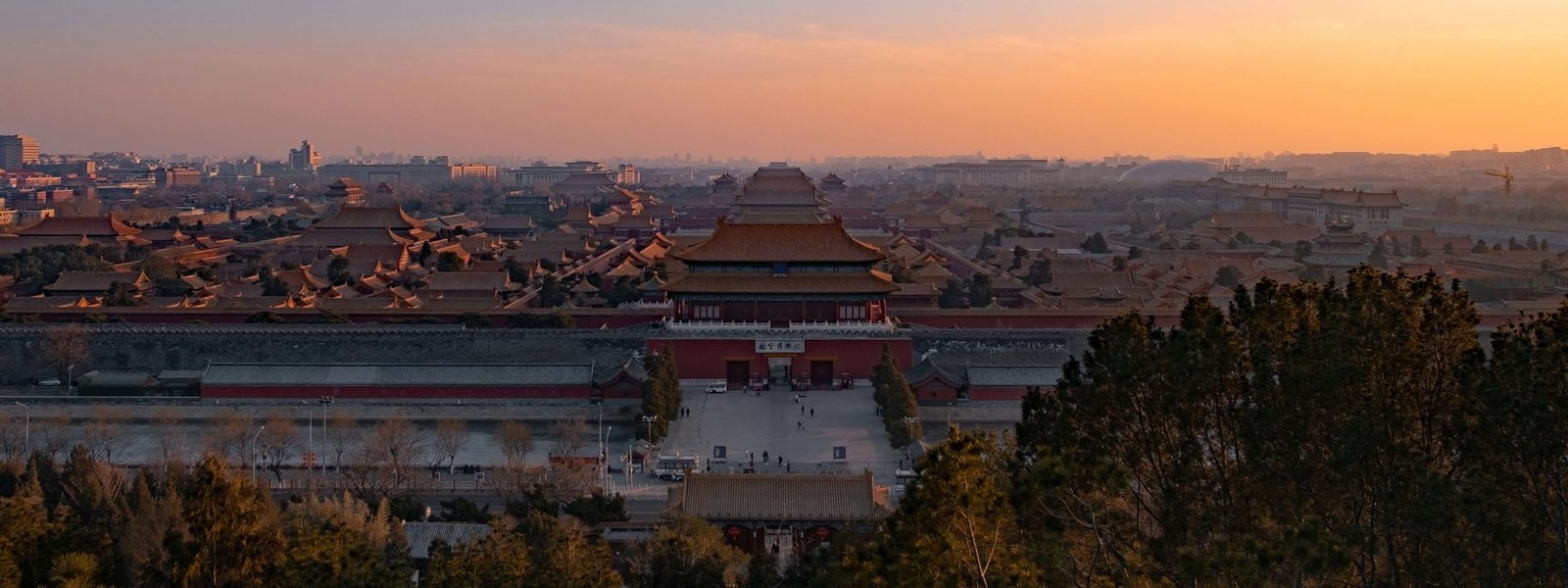

Put the two capitals side by side and the resemblance is structural. Neither is its nation's largest commercial city — that title went to Shanghai and to New York. Both are company towns for a single industry, and in both the industry is power: in Beijing the seat of party and state, ringed by the country's densest cluster of universities; in Washington the federal government, and the lobbying, law, and consulting firms that orbit it. Both stack a thin tier of high salaries over a wide floor of the people who keep the place running. And both, in the end, organize family life around the same thing — getting a child through the right school door.
So it's tempting to treat them as one case in two languages. On the thing that actually decides a family's future there, they are — right up to the gate. Then they split completely. That split is the whole point of this page.
01 — The money doesn't even cancel
On rent alone, Washington is the easier city. Which is the first clue that rent was never the real question.
Start with the headline numbers, each city in its own currency and in dollars for comparison.
Beijing at ¥7.2 = $1; Washington 1-bed is a district median-to-average range and after-tax pay a representative individual figure. Sources below.
Most comparisons on this site end with the multiples roughly canceling — high costs met by high wages, so the squeeze feels similar on both sides. Beijing and Washington don't cancel, and they don't tilt the way you'd expect. Washington's center rent runs more than double Beijing's, but Washington incomes run about four times higher, so a Washington earner spends a far smaller share of pay on rent. If this were a contest about affordability, Washington would simply win.
Which is exactly the point. The whole argument of the Beijing deep-dive is that rent was never Beijing's real price. Line the two capitals up on rent and Washington looks easier — because the thing Beijing actually charges for doesn't appear in a rent figure at all. To find where these cities really differ, you have to stop looking at prices and look at gates.
02 — Two company towns for power
Each city's economy is proximity to something you can't buy on a shelf
In both capitals the paycheck flows from nearness to power rather than from making or selling goods. Washington's largest employers are the federal government and the firms that feed on it — the consultancies, contractors, and law shops whose product is access and expertise. Beijing's high salaries come from the ministries, the headquarters, the state enterprises, and the universities that credential the people who staff them. Neither city is a factory town. Both are credential towns, where what you're really paying to be near is a system that decides who rises.
And beneath the towers, both cities keep a wide ordinary layer they quietly sort people out of — the workers who build and serve the capital without ever being counted as of it.

03 — The same arms race, in two languages
In both capitals, a good school is the prize — and the whole family reorganizes to reach it
Ask what the good life costs a family in either city and the answer is the same: a school. In Beijing it concentrates in the Haidian district, where the country's thickest cluster of universities sets the pace and parents drill five-year-olds toward a race that a Beijing registration makes winnable — the province-level odds are stark, with Beijing's undergraduate admission rate the nation's highest at 74.5% against Shandong's 38.3%, and Beijing's rate into the top two universities running about 26 times Henan's.
In Washington the same race runs across the river, in the Virginia and Maryland suburbs. There, every home address is assigned to a specific school pyramid — two houses on opposite sides of one street can feed different schools — and the price of the house openly reflects the school it unlocks. Local real-estate agents describe it without embarrassment as a "hidden tax" folded into the mortgage, the premium you pay to buy into a top pyramid. And above even that sits a further contest: Thomas Jefferson High School, the region's crown magnet, ranked around fifth in the nation, admits by competitive application — a residency gets your child the right to apply, never the seat. It is Haidian in another language.

04 — The gate
Same schoolhouse door. One gate reads a rulebook. The other reads a price tag.
Here is where the twin capitals stop being twins. Both ration a good school. Look at how — at what each gate actually checks before it opens.
Beijing
A rule
the gate reads your household registration
hukou · settlement points 117.33 in 2025
A good public school follows your Beijing hukou, not your bank balance. Registered local children enter public kindergartens at rates above 90%; children without a Beijing hukou, less than a third of the time. And you cannot simply buy the hukou — the points threshold to earn one climbs three to four points a year. You qualify, or you don't.
You can be wealthy here and still not pass.
Washington
A price
the gate reads your home price
the school is in the mortgage
A good public school follows your address, and the address is for sale. Buy the house in the right pyramid — a median that runs past $800,000 in Fairfax County, well over a million in its premium corridors — and the school comes with it. No registration to qualify for. The gate is money, plainly, and money is the one thing that opens it.
You can be anyone here — if you can afford the ZIP.
Both capitals sort your child at the schoolhouse door. One door reads your registration. The other reads your bank balance.
05 — The honest brake
Three things this comparison owes you
First, the two gates do not exclude the same way, and I won't pretend they're morally equal. A price gate shuts people out by wealth — but a family priced out of Fairfax keeps every civic right, can vote, and can move to another good district or another state entirely. A rule gate shuts people out by registration, and no amount of money or moving vans lets you walk around it. This page compares the mechanism of sorting, not the fairness of it.
Second, the analogy has real limits of scale. A Beijing hukou is a national legal status that bundles schooling, home-buying, and healthcare together; a US school district is a local line you can cross by signing a different mortgage. One is a wall around a life; the other is a toll on a house. Don't stretch the comparison past the schoolhouse door.
Third, and this is a limit on me: I have never lived in Beijing — I've passed through it since 1988 — and I have never set foot in Washington. The Washington side of this page is read entirely from data: the district's own school-boundary rules, the market reports, the agents' own words. Weigh that column as research, not a sidewalk.
Both capitals put a gate on the good life. In one, you qualify for it. In the other, you pay for it.
If you're choosing between them
Deciding on more than the rent
- Rent won't settle it — and it points the wrong way. On rent-to-income Washington is clearly the lighter city. If cost of living is all you weigh, that's your answer. But in neither capital is rent the real price of the life you're buying.
- Find your gate before you sign anything. In Washington the school is in the mortgage: identify the pyramid, then the price, and know that the top magnet is still a separate competition. In Beijing the school is in the household register: if you're not locally registered, the gate is eligibility, not money.
- Know which population you'd join. In both capitals the median wage is a phantom. Your real cost of living depends entirely on whether you arrive with the salary — or the registration — that clears the gate.